

How Enabling Technology Strengthens Employment Supports and Vocational Rehabilitation for People with TBIs and Neurodiverse Workers For individuals with traumatic brain injuries (TBIs) and neurodiverse job seekers, returning to work isn’t just about finding a job; it’s about building confidence, restoring independence, and having the right supports in place to succeed. Traditional vocational rehabilitation programs...
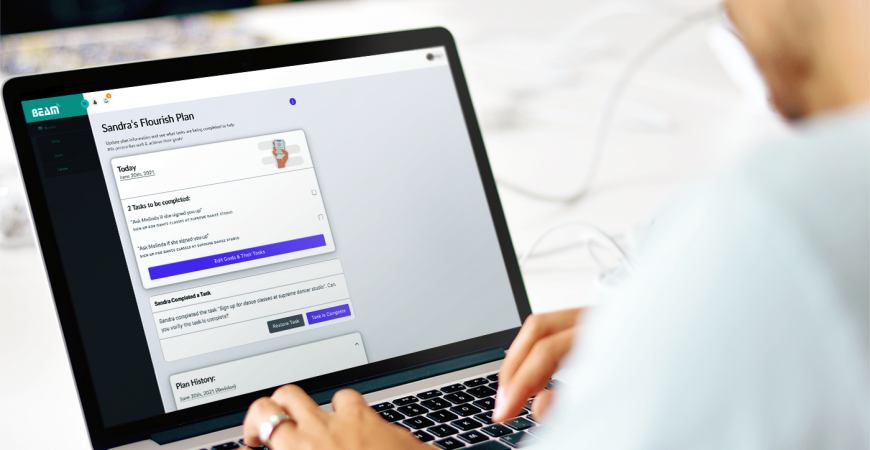
Health assessment dashboards and remote patient monitoring solutions are transforming how providers understand and support wellbeing. By turning continuous streams of data into meaningful, actionable insights, these tools help clinicians make faster decisions, personalize care, and improve outcomes. As the demand for efficient, data-driven health management grows, CreateAbility’s suite – My Emotional Navigator, Evalu8Now, and...

Digital task prompting systems are purpose-built tools that help people – especially those with intellectual and developmental disabilities (IDD) – manage everyday tasks with more confidence and less stress. Using step-by-step prompts, visuals, and sound cues, these systems bring clarity and routine to activities that might otherwise feel overwhelming. Below, we unpack the core features...

Enabling Technology and current healthcare challenges Across the country, IDD service providers are navigating rising support needs, workforce shortages, and the pressure to deliver consistent, data‑driven care. At the same time, individuals with intellectual and developmental disabilities deserve tools that help them build independence, regulate emotions, communicate effectively, and succeed in employment. CreateAbility’s product suite...

Emotional overwhelm doesn’t happen in a vacuum. It builds quietly (ie, a missed cue here, a rising tension there) until suddenly a person is no longer able to cope. What begins as discomfort can quickly spiral into escalation, crisis, and the need for high‑cost interventions. For individuals with intellectual and developmental disabilities, this cycle is...

🌟 What Agency Means to People with IDDs & TBIs The word “agency” is more prevalent these days. By agency, we don’t mean it in terms of a physical location; we’re speaking in about agency as the power to make choices, take action, and shape your own life. For individuals with intellectual and developmental disabilities...
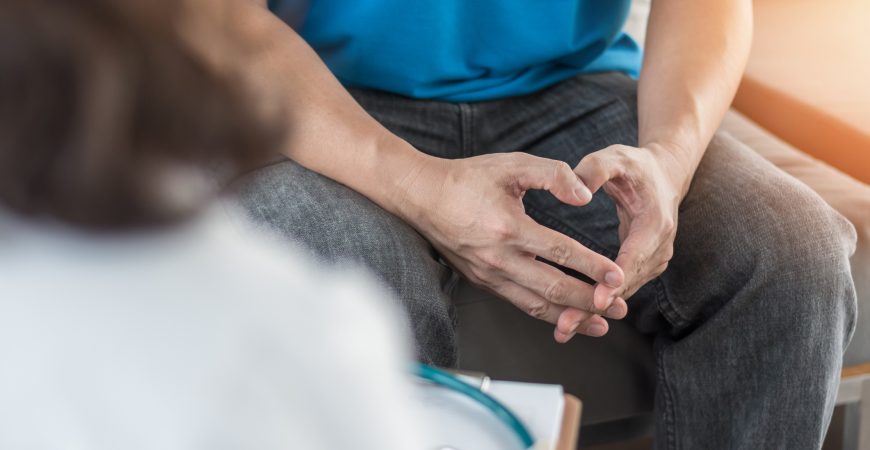
MyBRAINBased on Ecological Momentary Assessment, MyBRAIN is a new way to monitor patients’ health and wellbeing throughout their continuum of care. Clinicians can utilize MyBrain’s data to: Inform resource facilitation and care management.Analyze cohorts of interest, particularly those in high risk groups.Perform serial measurement of multiple TBI variables for patients with a brain injury. Collect...

What is a “vision board”? A vision board is an assemblance of images that together, help individuals visualize the outcome of the goals they set. They support the notion to “keep your eye on the prize” as we move about in this world and the answer to “why” we set out every day to tackle...

CreateAbility offers a suite of Apps that cover a variety of needs for people with intellectual disabilities and behavioral / mental health issues. This suite covers: emotional surveillance and emotional regulation, goal tracking and accomplishment, task prompting and reminders, employment discovery and exploration, and communication with staff or other individuals. Here is how they work...

Amidst the uncertainty of the pandemic and directly on the tail of the 30th Anniversary of the Americans with Disabilities Act in 2020, The National Council on Disabilities published their “Progress Report on National Disability Policy” which charts the progress and setbacks of employment within the disabilities population here in the U.S. In it, a...