
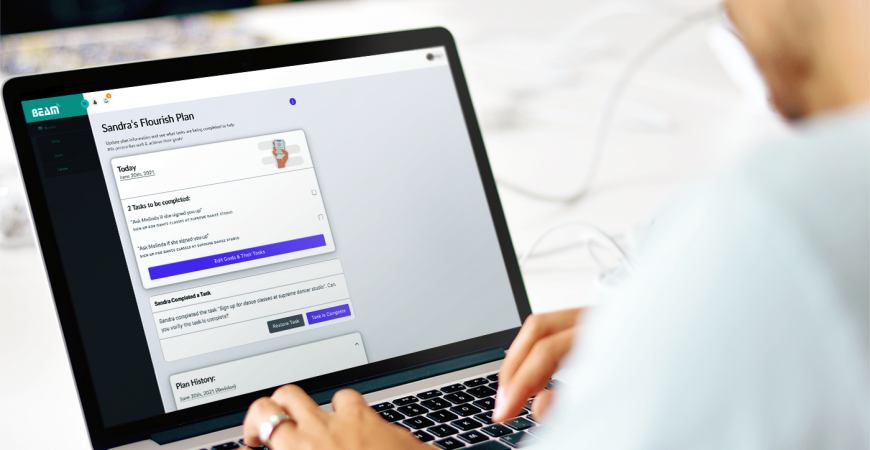
Health assessment dashboards and remote patient monitoring solutions are transforming how providers understand and support wellbeing. By turning continuous streams of data into meaningful, actionable insights, these tools help clinicians make faster decisions, personalize care, and improve outcomes. As the demand for efficient, data-driven health management grows, CreateAbility’s suite – My Emotional Navigator, Evalu8Now, and...

Measuring the Impact of Enabling Technology for Individuals With Intellectual Disabilities As agencies increasingly integrate enabling technology into supports for individuals with intellectual disabilities, one question rises to the top: How do we know it’s working? Technology alone doesn’t create independence – measurable outcomes do. That’s where Key Performance Indicators (KPIs) become essential. They help...

Person-centered care planning for people with intellectual disabilities is a transformative approach that prioritizes the unique needs, preferences, and abilities of individuals in their healthcare and support journey. This guide aims to equip support coordinators and caregivers with the knowledge and tools necessary to create individualized care plans that enhance engagement and improve health and...

Enabling Technology and current healthcare challenges Across the country, IDD service providers are navigating rising support needs, workforce shortages, and the pressure to deliver consistent, data‑driven care. At the same time, individuals with intellectual and developmental disabilities deserve tools that help them build independence, regulate emotions, communicate effectively, and succeed in employment. CreateAbility’s product suite...
At Sunrise Community Center of Tennessee, Program Coordinator Michael Davidson and his team members are helping redefine what independence looks like for individuals with intellectual and developmental disabilities. One of those individuals is Stacy – a young woman with an intellectual disability who had the ability to complete daily tasks, but struggled with executive functioning...

How CreateAbility Apps Support Mental Health and Wellbeing

How CreateAbility Apps Support Mental Health and Wellbeing

The degree by which your staff adopts enabling technology for the people you serve is super synonymous with the degree of positive outcomes the end-user experiences!

Many of the people you serve need task-prompting assistance at home....and at work! Why make them utilize two different enabling technologies?
INDIANAPOLIS, June 3rd, 2021 – CreateAbility Concepts, Inc., a technology company located in Indianapolis, recently launched Employment Pathfinder, a web and app-based system of surveys to help people with intellectual disabilities assess three key pre-employment criteria: job readiness, career interests and corresponding skill set. On June 3rd, the iOS version of the app was accepted...